New application report: faster ligand exposure boosts data quality for ligand-gated ion channels on QPatch Compact
In this latest QPatch Compact application report, we highlight how short compound exposure times help to achieve stable recordings from fast-desensitizing ligand-gated ion channels (LGIC). Fast LGIC, including members of the nicotinic ACh, GABA-A, AMPA, kainate, P2X and 5HT receptor families, routinely activate within milliseconds, then desensitize rapidly into non-conducting states. This behaviour is physiologically important, yet it creates significant difficulties for high quality in vitro electrophysiology.
Short exposure times are essential for fast-desensitizing ligand-gated ion channels
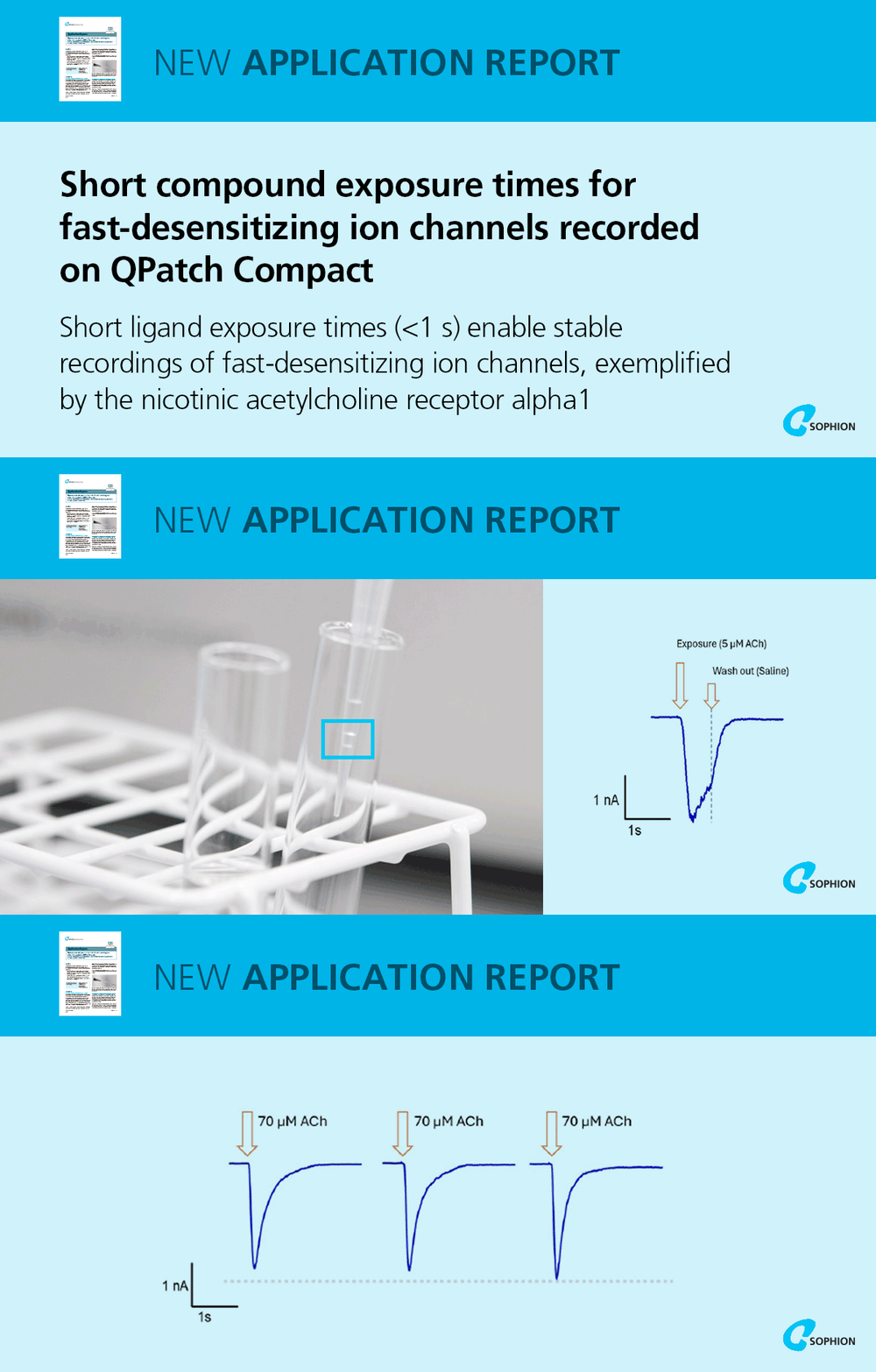
The application report shows how transient ligand delivery, lasting under a second, can preserve current integrity during repeated agonist stimulations. Using a programmable pipette with a solution stacking function, agonist and wash solution are layered within a single pipette tip, separated by an air gap. This approach allows researchers to trigger activation and then wash the agonist away almost immediately. As a result, cumulative desensitization is reduced and improves the consistency of sequential agonist-stimulated recordings.
Improved stability and consistency for ligand-gated channels with rapid kinetics
The technique was tested using the nAChR α1 receptor, a fast-desensitizing skeletal muscle ion channel. Under controlled conditions at -90 mV, brief exposure to acetylcholine produced rapid inward currents that remained stable when repeated, even at higher agonist concentrations. The microfluidic QPlate architecture supports this by ensuring efficient exchange of agonist and washout solutions. This prevents lingering agonist in the flow channel that could otherwise contribute to channel rundown.
For laboratories working on ligand gated receptor pharmacology, screening or compound profiling, this method offers a straightforward way to obtain robust, consistent and higher quality data. The ability to evoke comparable signals across multiple exposures strengthens assay reliability and allows researchers to attribute current changes to test compounds, rather than to kinetic artefacts.
Precise ligand delivery enhances stability of fast-desensitizing ion channels
- Short ligand exposure times <1 s are essential for fast-desensitizing ion channels
- Solution stacking enables precise, rapid agonist delivery followed by immediate washout
- QPlate microfluidics support complete, efficient solution exchange for reduced desensitization
- nAChR α1 recordings remain stable across repeated stimulations
- Can be applied across multiple ligand-gated ion channel families
